Starting a project on a property with unpredictable soil can feel like a gamble with your timeline and budget. If you are struggling with uncertainty around splashback material options, drainage stability, or whether your ground can even support a foundation, that stress is completely valid.
The right approach to site preparation can turn these geological hurdles into a solid, stable workspace. Working with an experienced land excavation contractor ensures that your “difficult” lot becomes a perfectly prepared site ready for your vision to take root.
What are the main difficulties of excavating in rocky or sandy ground?
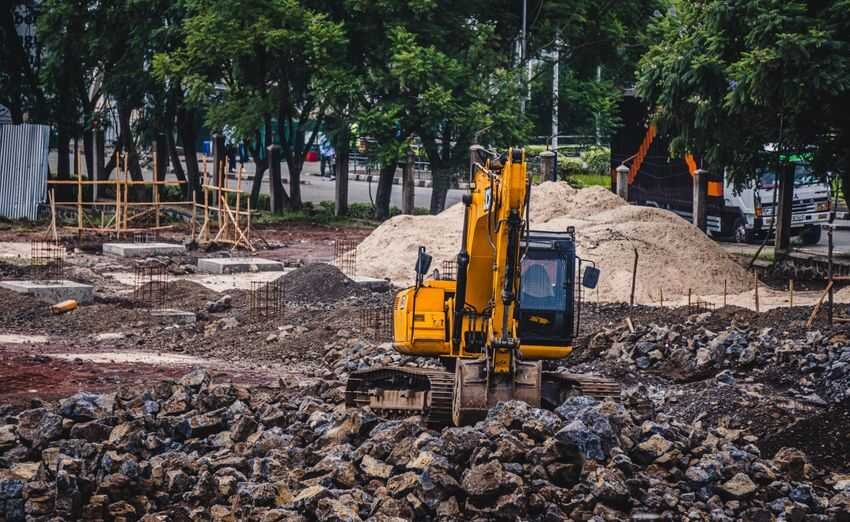
Excavating in rocky soil requires heavy equipment, such as hydraulic hammers or rippers, to break through bedrock, thereby increasing time and equipment costs. Conversely, sandy soil is unstable and prone to “cave-ins,” requiring specialized shoring and moisture control to maintain trench integrity. Both conditions require expert site assessment to ensure a safe, level build.
The Hidden Complexity of Rocky Terrain
Rock is rarely uniform, which makes it one of the most unpredictable variables in earthmoving. We often encounter “floaters”—large boulders hidden just below the surface—that can instantly stall a standard excavator.
Breaking through solid ledge or bedrock demands specialized attachments and a high degree of operator skill. If a team is not prepared for the material’s hardness, projects can grind to a halt while more powerful machinery is sourced.
Noise and vibration are also significant factors when working in rocky areas near other businesses or homes. A professional approach manages these disruptions through careful planning and the right choice of mechanical hammers or rippers.
Why Can Sandy Soil Be Deceptive?
Sand looks easy to move, but its lack of cohesion creates a high risk of structural collapse. In the industry, we often say that sand has a “low angle of repose,” meaning it wants to slide back into the hole you just dug.
Trenching in sandy environments requires immediate shoring or sloping to keep workers safe and keep the excavation open. Without these precautions, a simple utility trench can quickly widen into a massive, unmanageable pit.
Managing water is another hurdle, as sand drains rapidly but can also become “soupy” and lose all load-bearing capacity if the water table is high. This requires a strategy for dewatering or soil stabilization before any heavy building begins.
Equipment Wear and Maintenance Costs
The abrasive nature of both rock and sand takes a heavy toll on machinery. Sharp rocks can chip buckets and damage hydraulic lines, while fine sand particles act like sandpaper on pins, bushings, and undercarriages.
Experienced crews account for this by performing more frequent inspections and maintenance. Using the wrong-size bucket or a dull tooth in rocky soil doesn’t just slow down the job; it also risks a mechanical failure that could sideline the project for days.
We focus on matching the machine to the material. For example, using a bucket with a “shale lip” or specialized rock teeth can significantly improve our ability to penetrate tough surfaces.
Achieving Proper Compaction and Stability
Building on sand requires a specific understanding of how to pack the material so it won’t shift later. Because sand particles are relatively uniform, they often need a specific moisture content and vibratory compaction to reach the required density for a foundation.
Rock presents the opposite challenge: finding a level grade that won’t settle. Large voids between rocks can lead to “sinkholes” or uneven foundations if the backfill isn’t managed through crushing or sorting.
We often recommend importing structural fill if the native rock is too large or the sand is too fine to meet engineering specifications. This ensures that once the building is up, the ground beneath it stays exactly where it belongs.
Drainage and Erosion Considerations
Water behaves very differently in these two types of ground. In rocky areas, water often pools or runs off in unpredictable directions because it cannot penetrate the stone, leading to erosion on the site’s edges.
In sandy areas, water disappears quickly, which can wash away the very soil supporting your project. Proper silt management and the use of erosion blankets are vital to keep a sandy site from literally blowing or washing away during a storm.
Selecting the right splash back materials, such as gravel or riprap, helps dissipate the energy of falling water. This prevents “pitting” in sand and prevents mud from splashing back onto new structures in rocky, silty areas.
Partnering for Project Success
Navigating these challenges requires more than just a big machine; it requires a plan rooted in local geological experience. Whether you are dealing with stubborn bedrock or shifting sands, having a clear roadmap for site prep is the only way to protect your commercial investment.
At Brown’s Land Improvement, we pride ourselves on being the land excavation contractor that business owners trust for difficult terrain. We have the equipment and the expertise to handle rocky and sandy sites with precision and speed. Reach out to us today to get a professional assessment for your next project.